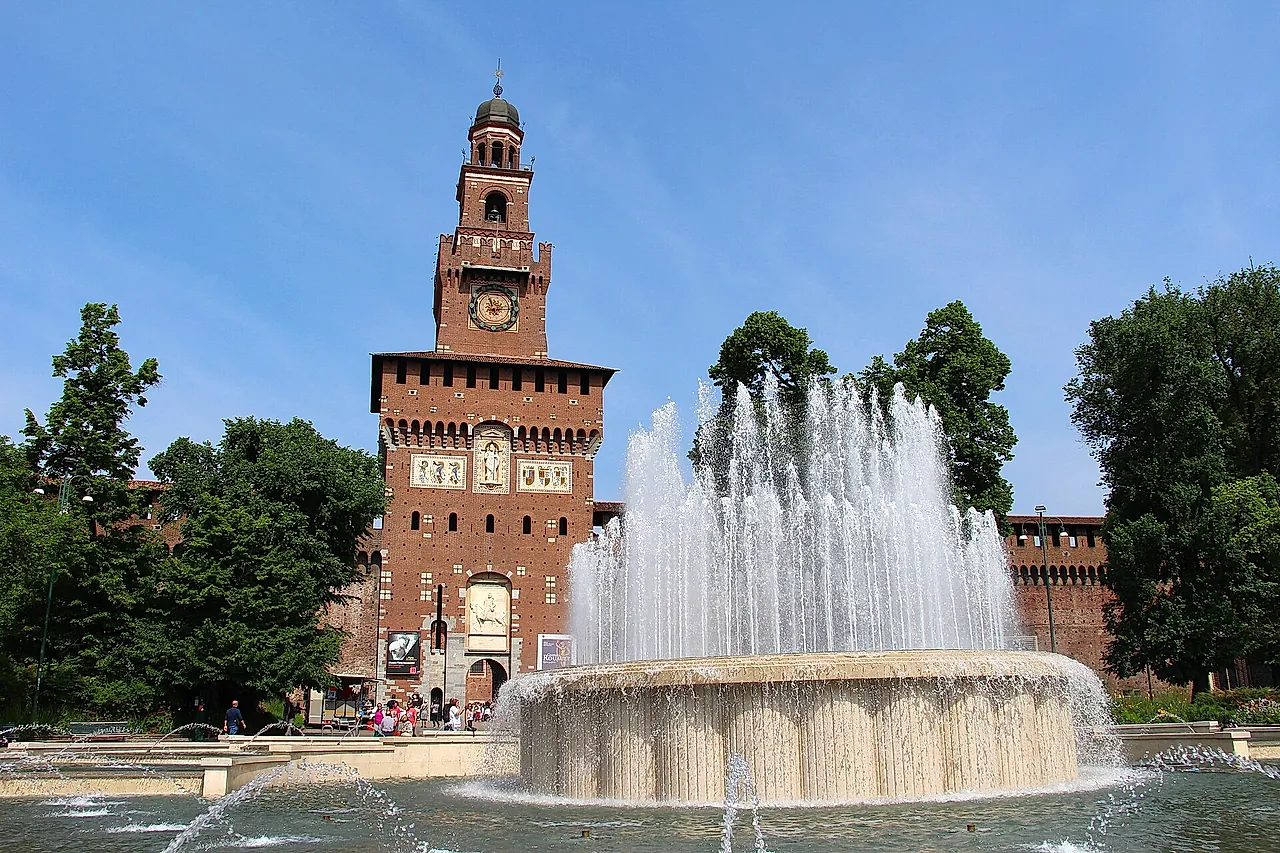
Milan · Castello Sforzesco · Museums and courtyards
Sforza Castle: tickets, hours and what to see
A Visconti and Sforza fortress with free courtyards, the civic museums and Michelangelo’s last sculpture. Hours and practical tips, read on 24 October 2026.
Today
Opening hours for every month are on the Opening hours page.
Checked against the official website on 24 October 2026 · Official source
In short
- One ticket covers all the Castle museums, the Pietà Rondanini included, with a reduced rate and free entry for several categories (under 18 among them), according to the Castle’s official site read on 24 October 2026. The audio guide is hired separately at the bookshop.
- The museums are open Tuesday to Sunday from 10:00 to 17:30, with the last entry at 16:30. They are closed on Mondays, 25 December, 1 January and 1 May. The courtyards are free every day from 7:00 to 19:30.
- Individuals do not need to book. The ticket is valid for the day it is issued, with one entry per section, and it is not refundable. Entry is free for everyone on the first Sunday of the month (tickets are collected at the desk, not online) and free up to age 25 on the second Tuesday.
- Leonardo’s Sala delle Asse is not part of the visit now: the Comune’s official site says it is closed for restoration. A national strike on 30 October 2026 may limit access.
- Three products are listed: a 90-minute guided tour with the Pietà Rondanini, an entry ticket with a digital audio guide, and a half-day guided tour that combines the Duomo and the Castle. The Tickets page explains the differences.
The Pietà Rondanini
The Castle describes it as Michelangelo’s last sculpture, the work of the last ten years of his life. Since 2 May 2015 it has been shown in the former Spanish Hospital, in the Cortile delle Armi, in a display that lets you walk around it and see it from every side.
The vault of the room still carries verses of the Apostles’ Creed in garlands with the apostles’ names, uncovered by restoration begun in 2013. The Comune di Milano bought the sculpture in 1952, after it was put up for sale in 1949; it is documented from 1807 as the property of the marchese Giuseppe Rondinini.
There is no separate ticket: the Castle has one ticket for all its museums and for the Pietà Rondanini museum.
One ticket, several museums
The Museo d’Arte Antica e Armeria shows about 400 works from the 5th to the 16th century, according to the Castle, including the Arca of Bernabò Visconti (about 1360–1385, by Bonino da Campione and collaborators) and an armoury of European weapons from the late 14th to the 19th century.
The Pinacoteca covers Lombard and Milanese painting from the 15th to the 18th century. Among the works the Castle singles out is Mantegna’s altarpiece Madonna in Glory with Saints, signed and dated 15 August 1497 (room XXIII). The Museo degli Strumenti Musicali holds about 900 instruments.
The ticket also opens the Egyptian gallery in the basement, the furniture museum (the Stipo Passalacqua of 1613 is in room XVIII) and the Museo delle Arti Decorative, where the twelve Trivulzio Tapestries, designed by Bramantino and completed in 1509, hang in the Sala della Balla. The Castle also says the ticket gives access to the exhibitions on show; “Nino Ferrari. La forma moderna del metallo” is listed on the Castle’s site for 7 October 2026 to 31 January 2027.
What is closed or changing
A notice on the Comune’s official site, read on 24 October 2026, says that the Sala delle Asse (the room the Castle credits to Leonardo da Vinci in 1498) is closed for restoration and that the prehistory and protohistory section is closed. The Castle’s own notices page mentions only the prehistory section. We found no reopening date.
The Castle also says Foppa’s Madonna del libro is away for maintenance, replaced by a 15th-century Lombard Madonna with Child; the notice carries no date. The Sale Panoramiche (third floor of the Cortile della Rocchetta) had a notice of closure for a technical fault in August, with no year; we could not confirm whether they are open now.
Displays change, so check the Castle’s notices page before you go.
Courtyards and the Torre del Filarete
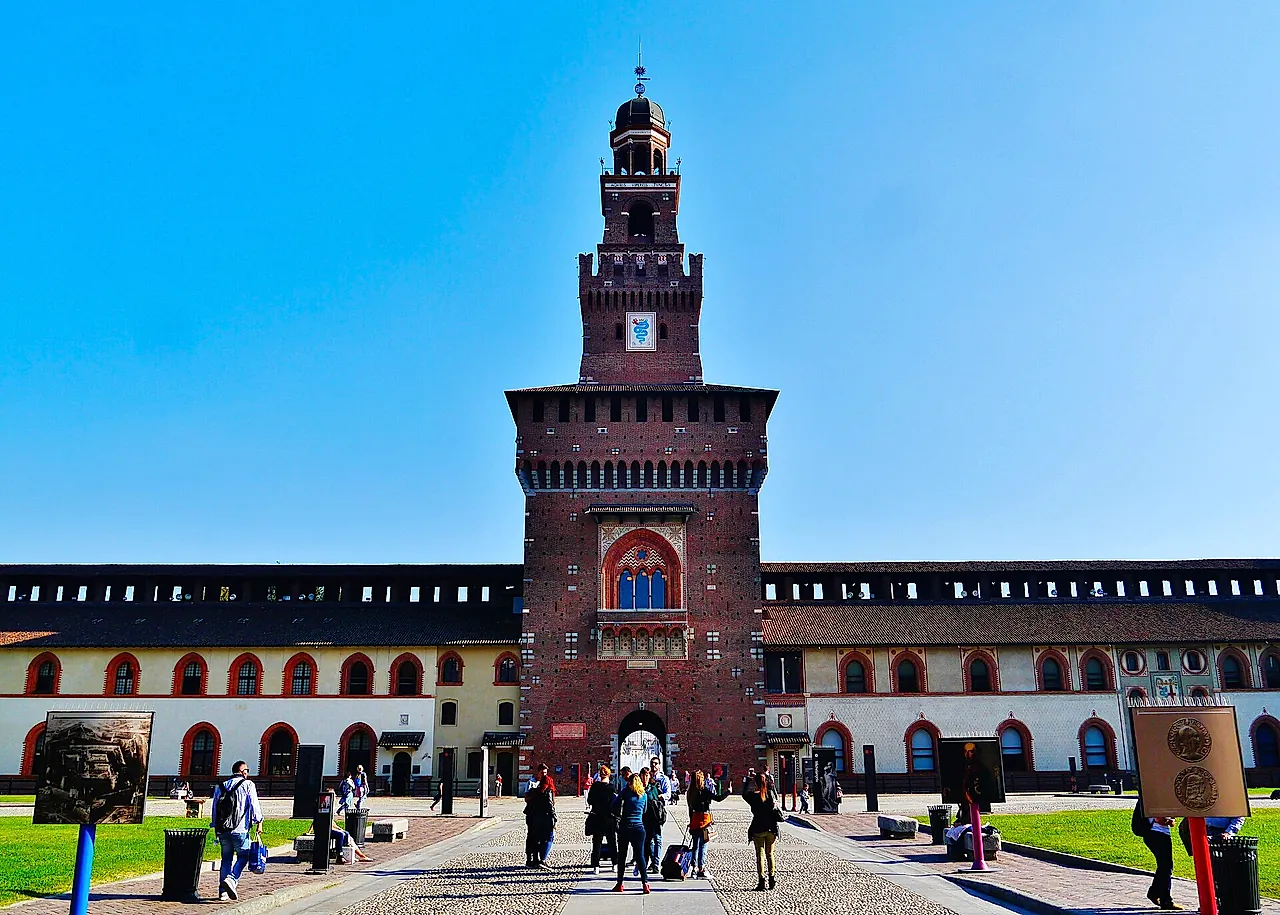
The courtyards are a free open-air museum of sarcophagi, fragments and coats of arms, open every day from 7:00 to 19:30: the Cortile delle Armi, the Corte Ducale with its portico of the elephant (1473, Benedetto Ferrini) and the Cortile della Rocchetta.
The Torre del Filarete over the main gate is the Castle’s symbol. It was designed by Filarete in 1452, collapsed in June 1521 when it was used to store gunpowder, and was rebuilt by Luca Beltrami and inaugurated in 1905, dedicated to Umberto I. The Infopoint is in the tower. We could not confirm whether visitors can climb it.
The Merlate Panoramiche, a walkway along the battlements, are a separate route with a separate ticket (see Hours).
From Visconti fortress to museum: a short history
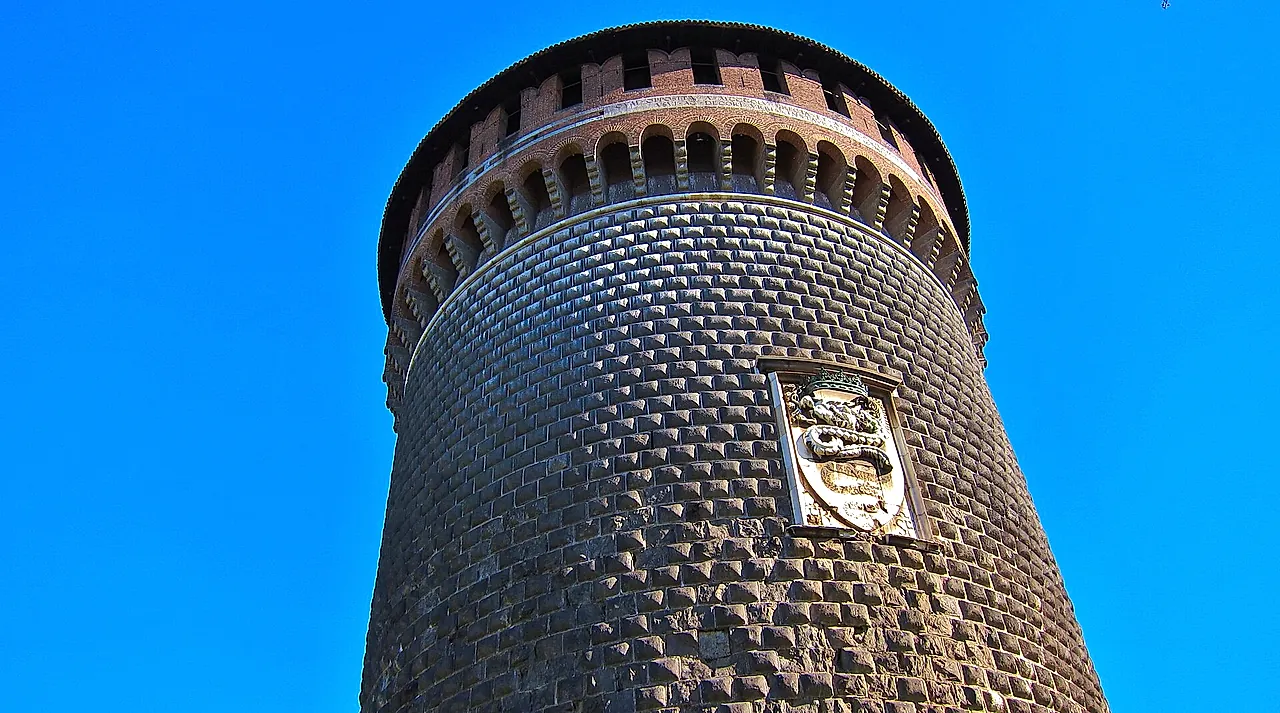
According to the Comune di Milano, Galeazzo II Visconti built the fortress between 1360 and 1370 astride the medieval city wall, taking in the old Porta Giovia. After the Ambrosian Republic of 1447, Francesco Sforza, acclaimed lord of Milan on 25 March 1450, began the rebuilding, and in 1452 he brought in the architect Filarete for the front towards the city. Under Ludovico il Moro the court counted Leonardo da Vinci and Bramante among its artists.
From 1499 the Castle passed to French, then Spanish and Austrian rule, and became a barracks; Napoleon had the star-shaped fortifications pulled down from 1801. The restoration led by Luca Beltrami began in 1893 and is also recorded in Baedeker’s 1903 handbook (p. 129). The Castle says the city subscribed to pay for it, and that the Filarete tower was inaugurated on 24 September 1905.
The civic museums were founded between 1862 and 1886 and gathered in the Castle. In August 1943 bombs damaged it and burned two thirds of the city’s historical archive and the whole ethnographic museum; after the war the Museo d’Arte Antica was restored and rearranged by the BBPR studio. Sources: the Castle’s history pages (read on 24 October 2026) and Baedeker, Northern Italy, 1903.
Visitor guide
Milan Tours and Experiences: Bus, Bike, Boat and City Card
Seven Milan tours compared: two hop-on hop-off buses, two bike tours, a boat aperitif, an audio guide app and a city card, with what each includes.
Day Trips from Milan: Lake Como, Lugano, Bernina and Maggiore
Day trips from Milan compared: Lake Como, Lugano, the Bernina Red Train, Lake Maggiore boats and Villa del Balbianello: times, languages, inclusions.